Showing posts with label insurance. Show all posts
Friday, October 20, 2017
Common Terms Health Insurance Terms You Need To Know
Claim: this is the detailed invoice or the bill that your health care provider (such as your doctor, clinic, or hospital) submits to your health insurance provider for any care you receive. If you paid for service out-of-pocket, you can also submit your own claim to your insurer directly to try and get reimbursed.
Premium: This is the amount you pay monthly to maintain your health insurance plan. Even if you never end up needing health care services, you still have to pay your monthly premium to your health insurance company to stay covered.
Deductible: The amount you pay for covered health care services before your insurance plan starts to pay. Your insurance company usually doesn't start covering your health care bills right away. You'll probably have to pay a set amount first. That's called your deductible. Usually, the cheaper the plan, the higher the deductible.
High-deductible health plans: Under these plans, you're expected to pay more of your health care bills, but your monthly payments for coverage will be cheaper. It can be a good option for a young, healthy person who doesn't expect to go to the doctor much. These plans allow you to stash away money into a tax-advantaged account called a Health Savings Account (HSA) that can be used to cover deductibles and other medical expenses.
Copayment: A set fee you pay when visiting a doctor after you've met your deductible. You might have different copayments for doctor visits, hospital stays and other types of care.
Coinsurance: Some insurance plans expect you to pay a percentage of the bill even after you've met your deductible. For example, you could be on the hook for 20% or 30% of the bill while the insurer handles the rest.
In-network provider: A medical professional who is part of your health insurance coverage and has pre-determined agreements with your insurer on what to charge for certain services and visits. Staying in network means your insurance will cover more of the costs and your bills will be much cheaper.
Out-of-network provider: A medical provider who does not have a contract with your health insurer, and will likely be more expensive to receive care from. You can end up being responsible for most, if not all of the bill if you go to an out-of-network doctor.
Out-of-pocket maximum: While deductibles and coinsurance could mean you end up paying a lot of money for health care, the good news is there is a limit to what you'll be responsible for paying. If you end up with a lot of medical bills one year and reach your plan's cap, the insurance company will cover 100% of your medical services for the rest of the year.
Explanation of Benefits: While it may look like a bill, it isn't. An EOB is just an overview of what (and how much) your doctor billed to your insurance company and what the insurer has agreed to cover. It can also include an estimate of how much you might be expected to pay, but the medical provider will send a bill separately.
Source CNN MONEY
Turmeric Curcumin with Bioperine 1500mg $17.95
Hyperbiotics PRO-15 Probiotics $23.70
SmartyPants Kids Complete Gummy Vitamins: Multivitamin & Omega 3 $15.05
ULTRA PROBIOTICS * Best One Probiotics For Men & Women For Weight Loss $17.47
Hamilton Healthcare Platinum Series Garcinia Cambogia Dietary Supplement $19.97
Vital Proteins Pasture-Raised, Grass-Fed Collagen Peptides $43.00
Doctor's Best High Absorption Coq10 w/ BioPerine (100 mg) $13.65
Thursday, September 21, 2017
Why Do You Need Flood Insurance?
The destruction left by hurricanes Irma and Harvey has left a reminder to homeowners to get a flood insurance, specially this year which has been particularly bad for disastrous weather.
Here are the basics for flood insurance policy:
Who needs flood insurance?
People who live in high-risk areas with federally backed mortgages are required to buy flood insurance. For renters in high-risk areas, or if you know your apartment has flooded in the past, you should consider buying insurance. However, apartments below street level are almost never covered by flood insurance for renters.
For homeowners and renters who live outside the high-risk areas, it can be a low-cost expense.
Where to purchase flood insurance policy?
You can purchase a policy from National Flood Insurance Program, if you live in a participating community, or from a private insurance company.
How much does flood insurance cost?
Premiums depend on the area where you live. The average annual price of flood insurance under the National Flood Insurance Program was about $878 in April of this year.
Does my homeowner or renter’s insurance protect me from floods?
Ussually homeowner or renter’s insurance doesn't cover flood damage it is one of the most commonly excluded hazards in homeowners insurance policies. You should check your individual policy. Homeowners and renters need to buy separate flood insurance. As a renter, you may be able to buy flood insurance from the National Flood Insurance Program if you live in an area that participates in the program.
Does flood insurance cover water damage from plumbing leaks?
It doesn't cover it. Homeowner’s or renter’s insurance usually cover something like a ruptured pipe or sudden damage.
Compact First Aid Survival Kit (95 Piece) by Ready First $24.95
HSYTEK Survival Gear Kit 11 in 1 , Professional Outdoor Emergency Survival Tools Set with Saber Card $23.65
Emergency Disposable Rain Ponchos Various Colors $7.99 - $122.00
Deluxe 2-Person Perfect Survival Kit for Emergency Disaster Preparedness $99.95
Wednesday, August 9, 2017
Wells Fargo Guaranteed Auto Protection Insurance Program
Wells Fargo's Guaranteed Auto Protection Insurance Program (GAP) is intended to protect a lender against the fact that a car, which is the collateral for its loan, loses significant value the moment it is driven off the lot. Basically it protects the bank or financial institution that lends the buyer money for the purchased car. GAP insurance makes up that difference for a lender if, for instance, a car is stolen before the loan is paid off. Regular car insurance typically covers only the current market value.
Wells Fargo is being investigated for this, The Office of the Comptroller of the Currency and the Consumer Financial Protection Bureau are examining this issue.
Wells Fargo is in hot seat again over the last few weeks after it was exposed that they may have forced unwanted insurance on customers who took out car loans. On Tuesday, California’s insurance regulator said he would investigate the bank and the insurer, National General Holding Corp., over the "improper placement" of such coverage.
More bad news about Wells Fargo, the company said that they found more fake accounts that has been created by employees.
The bank said in a regulatory filing that its review of potentially unauthorized accounts could reveal a “significant increase” in the number of accounts involved, up from the 2.1 million that it previously estimated. Wells Fargo said it had expanded its investigation to add three years to its review period, which covered accounts opened from 2011 to mid-2015.
All the Little Children by Jo Furniss $4.99
When They Come for You (Harper McDaniel) by James W. Hall $4.99
AFTERLIFE by Marcus Sakey $4.99
Biblical Blueprint For Financial Success $0.99
The Wisdom of Finance: Discovering Humanity in the World of Risk and Return $14.99by Mihir A. Desai
Wednesday, August 24, 2016
Disability Insurance What You Need to Know
Disability Insurance or sometimes called DI, disability income insurance, or Disability Income protects the insurers earned income against the risk of disability. It would pay a portion of your salary, creating a safety in case of illness, disability or accidents that render the individual unable to work.
For instance an employee may suffer from an inability to maintain composure in the case of psychological disorders or an injury, illness or condition that causes physical impairment or incapacity to work. It encompasses paid sick leave, short-term disability benefits (STD), and long-term disability benefits (LTD). If you suddenly become ill or disabled the Disability Insurance can help you pay your bills, make your monthly rent or mortgage loan payments, buy your groceries, make your car payments, pay for your children's education, etc.
According to Council of Disability Awareness the average length of a long-term disability claim is three years. So, what you need to do is to target above three years to give you more protection.
Yes, workers compensation is a Disability Insurance, however it's only for work-related disabling illness, and it only covers about 2/3 of your pre-disability income. Most long-term disabilities doesn't come from work-related illness or injuries it comes from cancer, heart disease, and other illnesses.
Having a disability insurance is really important since no one knows what happens in the future. Protecting part of your income would be better than having no protection at all.
If you want to protect your future and get additional Disability Insurance you can get quotes from these online brokers:
DisabilityQuotes.com
Disability Insurance Resource Center
PolicyGenius
Investing Money in Your Retirement: The Secret Way that the Super Wealthy Use Life Insurance as a Tax Free Retirement Fund
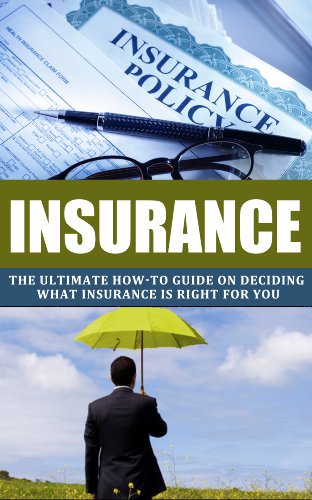
The Ultimate How-To Guide on Deciding What Insurance Is Right for You (Insurance, Insurance policies, AIG story, Risk Management, Coverage, Life insurance, Book 1)
Best Practical Guide for Risk Management, Property, Liability , Life and Health with Concepts and Coverage
Thursday, June 23, 2016
Millennials Prefer to Rent but Pass on Renters Insurance
According to a survey published on insuranceQuotes, Millennials prefer to rent homes, and most of them don't like to get renters insurance. Even though that coverage is not expensive, and having non could cause a huge financial hardship.
Based on the April 2016 survey for insuranceQuotes.com done by Princeton Survey Research Associates International, 66% of 18 to 29 years old are renting their home, compared with just 37% of consumers overall. What is alarming is that less than 33% of Millennial renters have renters insurance.
When questioned about not having renters policy, 59% of renters in the 18 to 29 age group said that cost is not the primary reason. Instead, they believe it’s unnecessary because they live in a very secure property (61%), or they don’t own enough personal property to insure (43%). And 41% of them said they’re avoiding renters insurance because they don’t understand how the product works.
A lot of the consumers are foregoing the benefits of renters insurance because they underestimate the benefits and overestimate its cost. The average annual premium is $188 (or $15.67 per month); however, 25% of 18- to 29-year-old respondents believe they’d have to pay $1,000 or more. People need to be educated since it is an affordable financial safety net that every renter should have.
Other report highlights include:
Renters who don’t have renters insurance because they don’t understand the product increased from 27% in 2015 to 33% this year.
Renters who don’t have insurance because they don’t know where to get it also increased from 20% in 2015 to 26% this year.
College graduates are more likely to have renters insurance compared to high school graduates or those with a lesser education – 64% to 24% respectively.
35% of respondents mistakenly said a renters policy does not cover personal property damaged in a natural disaster or property stolen from you outside of your rental home (60%).
The full report is available here: http://www.insurancequotes.com/home/millennials-and-renters-insurance-051916.
The survey was done by Princeton Survey Research Associates International (PSRAI) through telephone interviews with a nationally representative sample of 1,000 adults living in the continental United States.
Here is why Renters Insurance is important for me personally:
1. If my stuff is stolen like my iPhone, iPad or laptop, furniture or bicycles could cost thousands of dollars. Renters insurance covers more than just theft it also covers fire, water problems and vandalism.
2. If you burned your dinner and it resulted to smoke damage. Your landlord will bill you for that damage even if none of your property was damaged since his property has been.
3. Renters insurance is about $12 to $30 a month for $30,000 worth of coverage a small cost with big pay off.
Thursday, June 9, 2016
Homeowners Needs to Take Another Look At their Insurance Coverage As Hurricane Season Starts
Homeowners needs to reexamine their insurance coverage annually, specially those who live in places that are heavily affected by tropical storms. They need to know if the cost of their premiums are shooting up, or if their deductibles have changed, or if they are entitled to new discounts.
This year it's really important to do that because it is expected that hurricane will be most active this year since 2012, according to forecasts released by The Weather Company.
These storms are already affecting the southeast United States. Tropical storm Bonnie battered the Carolinas over Memorial Day weekend, and Colin, which made landfall Monday and resulted in state of emergency declared.
Colin which packed a 50 mile-per-hour winds produces heavy rain, tornadoes and hail that battered residents along Florida's Gulf and Atlantic Coasts. The residents protect their property using sandbags. Officials distributed 13,000 sandbags to residents of Tampa, which has a history of flooding. Some residents have evacuated the area.
This why it is important to reevaluate their homeowners insurance policy. Let's assume that the replacement cost value of the property is correct, a homeowners policy will cover any wind damage caused by a hurricane. However, it will not cover damage due to flooding and homeowners need to be aware of whether they have a hurricane deductible.
Insurance companies sell policies with a hurricane deductible to limit their exposure to devastating storms. Usually, these hurricane deductible is much higher than the standard one for homeowners insurance policies. A total of 19 states have hurricane deductibles, and most of them don't have a set dollar amount but a percentage of the replacement cost value of a home. That can be huge depending on the damage incurred.
Insurers don't choose to have a hurricane deductible. This deductibles are incorporated in homeowners insurance at the discretion of the insurance company and are activated under the terms of the policy, usually when the National Hurricane Center issues a warning or names a tropical storm.
The Insurance Information Institute issue this different hurricane deductibles across the 19 states that have and it is posted on their website, or consumers can refer to their respective state's department of insurance for details on them.
The states with special storm deductibles include: Alabama, Connecticut, Delaware, Florida, Georgia, Hawaii, Louisiana, Maine, Maryland, Massachusetts, Mississippi, New Jersey, New York, North Carolina, Pennsylvania, Rhode Island, South Carolina, Texas and Virginia.
Monday, May 9, 2016
Smartphone Insurance 101
Smartphone are expensive and easy to lose, break or stolen, this is why smartphone or cellphone insurance is in demand nowadays. Smartphone insurance covers lost, stolen or damaged phones. However, you should take note of the following information about this kind of insurance:
1. Deductible can be as much as the cost of the smartphone - iPhone 6S with a 2-year contract from Sprint is priced at $199.99. The Sprint’s Total Equipment Protection insurance costs $11 per month. Unfortunately for you if you lost or break your smartphone the insurance deductible will be $200.
This happens since carriers heavily subsidize smartphone prices if you purchased it with a contract. The retail price for an iPhone 6S is about $650. Installment plans, which often require no upfront payment for the phone, they simply spread its cost out over your contract term.
2. The Insurance Company will Determine the Replacement Smartphone - Your insurance company will have the final say on the replacement smartphone it may be of the same make and model, it maybe of different color or type. It may also be refurbished.
3. Carrier companies can dropped you from your plan for making a claim - Most insurance providers limits customers to two claims in a 12-month period. This can be a problem for people that are particularly accident-prone. The trouble is, those are the people for whom cellphone insurance makes the most sense.
Here are Cellphone protection plans:
AT&T -
Monthly fee: $7.99.
Deductible: $50-$199, depending on device. They offer declining deductible program that can give you 25% to 50% less.
AppleCare+ -
Cost: $99-$129 for two years of coverage.
Covers: Damage (two incidents) and phone malfunctions.
Deductible: $79 or $99 per incident, depending on model.
T-Mobile -
Monthly fee: $10.
Deductible: $20-$175.
Sprint -
Monthly fee: $9-$11
Deductible: $50-$200, depending on device.
SquareTrade -
Cost: $119 for two years of coverage.
Covers: Damage and phone malfunctions.
Deductible: $99 for all claims.
Verizon -
Monthly fee: $7.15 (smartphones), $5 (basic phones, tablets).
Deductible: $99-$199 (smartphones), $49-$199 (basic phones, tablets).
Thursday, March 24, 2016
Long-Term Care Insurance Are Too Expensive
If you check out the prices of today's long term care insurance, I'm sure you'll ask who can afford them? They are just too expensive for the regular working class like us.
Long-term care insurance policies pay back policyholders a daily amount for services to assist them with activities of daily living such as bathing, dressing, transferring (to bed, chair, etc), housework, shopping for groceries or eating. Unlike traditional health insurance, long-term care insurance is designed to cover long-term services and supports, including personal and custodial care in a variety of settings such as your home, a community organization, or other facility.
In Pennsylvania, premiums have gone up as much as 130%, yearly rates have exceeded $8,000. So why are they so expensive? President of Rosenthal Wealth Management Group Larry Rosenthal said that nowadays, people are living longer and aren't necessarily living healthier. So insurance companies left the market since there are little or no profits and those that remain have increased premiums significantly to keep up with costs.
Here are some alternatives way to pay for Expensive Long-Term Care Insurance:
Short-term care insurance - this policy is like long-term care insurance, however the benefits are typically capped at one year. This policy is more affordable and they may also be available to older seniors or those who aren't otherwise eligible for long-term coverage.
Life + long-term care insurance - the combination of long-term care coverage and life insurance may help consumers avoid the type of rate increases currently being experienced in Pennsylvania.
Long-term care annuities - These annuities require a hefty upfront payment, but if you need long-term care, your overall cost may be lower than what you'd spend on insurance premiums.
Health savings accounts - For those who have an eligible high-deductible health insurance plan, a health savings account offers a way to put money aside tax-free for medical costs, such as long-term care.
Home equity - Retirees without significant investments may still own a valuable asset: their house. Tapping into home equity through a line of credit, taking out a reverse mortgage or selling a house outright are some of the ways people can use their property to pay for long-term care.
Pensions or Social Security - Depending on the size of your monthly payments and the amount of care you need, paying for services monthly out of a pension or Social Security benefit may be option.
Medicaid - if all else fail, and a person's income and assets have been depleted, the government will step in to pay for care. Medicaid won't pay for assisted living, but it will cover nursing home care and many states also pay for home health care services for eligible people.
Thursday, February 11, 2016
Farmers Insurance Discontinue Coverage Of A Insurer after Filing Tornado Claims
Farmers Insurance cancelled the coverage of Richard Perry, a Moore, Oklahoma resident after he filled two claims for tornado damage. He got a letter from the insurance company stating that they would be canceling his policy, effective in April.
In an interview he said it doesn't make sense to him, he called his local agent and the agent to him that the company would be more than happy to continue coverage on their vehicles but, due to the location of his home in a high risk area, it would be too high a risk to cover it.
The letter reads: "Unfortunately, we are unable to continue coverage, because the number of losses you have experienced exceed our acceptability limits."
The family filed claims on two occasions following tornadoes. Their first claim was in 2013, when the insurance company paid $1,615 for wind damage. The second came in March of 2015, when Farmers paid $7,746. Perry said most of that claim was paid out on his truck, which was damaged in the storm.
Under state law, an insurance company can't drop a policyholder for filing a single claim. But, companies can take action if a policyholder files two claims or more.
It's hard to trust an insurance company that will drop you like a hot potato when things are hard on you.

Farmers Insurance is Rated Worst!
Monday, December 7, 2015
Insurance that You Don't Need
Insurance are important for our financial health and insurance that we should have are Health insurance, auto insurance, property and casualty insurance and life insurance. Some of them are mandatory and some are not, but in most cases they are. However, there are types of insurance that are not actually needed which is listed as "junk" insurance by the nonprofit consumer watchdog group Consumer Federation of America.
Here are some types of insurance that they considered junk:
This is a new insurance product that will be on the market in January 2016. This insurance is designed to protect the down payment on your home if the real-estate market go under again.
ValueInsured, which is based in Dallas named this kind of insurance as +Plus. This is not for speculative buyers since the owner will need to live in the home and he/she cannot make a claim on the the insurance for 2 years, while it lapses after 7 years.
However, this type of insurance is for debtors who might have to move suddenly for a job, like military families, or move into marginal markets that are particularly volatile, such as Stockton, California which was hit by the worst price cut during the real estate crash with home values cut by half as a result of widespread foreclosures.
According to ValueInsured, about 8 million debtors still owe more than what their house is worth, compared with more than 15 million during the worst part of the real estate crash in 2012.
The price of this insurance is about $840 for a $20,000 down payment, and it will protect a down payment of up to $200,000 for a higher premium price. However, the policy will only activate if the market along with the value of your individual home falls 10% or more, as determined by the Federal Housing Finance Agency’s House Price Index, and then you only get back either the amount of equity you lost, or the actual down payment, up to $200,000.
Joe Melendez ValueInsured chief executive said that the aim of this product is to promote the housing market to millennials, renters and parents by attempting to ensure that their down payment is protected. This product is not for everyone. If you’re buying a home that you will live in for 30 years, don’t buy this product.
A study published by Bankrate.com says that 37% of Americans have credit card debt greater than or equal to their emergency savings, meaning a steep medical bill, a car accident or other unexpected expense could push them over a budgetary cliff. Some credit card companies are offering insurance against being unable to come up with monthly payments.
This insurance that are offered by credit card companies is designed to pay your minimum balance for a period of time if you lose your job or are incapacitated or unable to work, either in the form of Debt Cancellation Contracts (DCC) or Debt Suspension Agreements (DSA). Other instances where the credit card companies can either cancel or suspend your monthly payment include divorce, military deployment or a natural disaster. If you die, the credit card company may pay off your entire balance, with other companies offering only up to a certain balance, such as $10,000.
The credit card companies say this helps protect a consumer’s FICO score, which otherwise would drop if the cardholder can't pay their dues. While some credit card companies charged a flat fee of $19.99 a month for insurance coverage, others charged between 85 cents and $1.35 per every $100 of the outstanding balance and a national median fee of 89 cents per each $100 in the balance.
The GAO report noted that of the $2.4 billion collected in 2009, just $513 million went to consumers, while $1.3 billion went into the pocket of the credit card companies in the form of earnings once reserves of $574 million were set up.
Clearly these credit card insurances is a bad deal for consumers since if you lose your job you can apply for unemployment benefits immediately.
This insurance covers existing appliances, regardless of age, make or model that are already in the house not just those newly purchased or replaced. Some insurance companies promise total coverage of all appliances and components in the house, like air condiotner, hot water heater, or a furnace for as little as $59 a month. However, most of this plan have deductibles like many other insurance products about $75 to $125 for those offered by American Home Shield. And the repairman that will do the work will get the minimum amount of work since the insurance company wants to limit the costs. Repairman ussually accept this kind of calls when things are slow.
Insurance plan like the Gerber Grow Up Plan and the Gerber Life College Plan are purchased by parents and grandparents when the baby is born and the premiums are really low while the cash value benefits are guaranteed.
The Gerber Life College Plan (endowment insurance policy) will give the policy holder a lump-sum payment at the end of the term which is about 18 to 21 years. It can be used for college, or used to fund an adult insurance coverage plan as long as premiums are getting paid. The company said its advantage is that the life coverage can continue automatically into adulthood without fear of cancellation. However distributions from the endowment insurance policies are often taxed, unlike the distributions of a 529 college savings plan or an education savings account.
Most athletes and celebrities do this, they insured body parts, J. Lo insured her butt for $27 Million, Julia Roberts insured her smile for $30 Million, retired Pittsburgh Steelers safety Troy Polamalu insured his flowing locks for $1 million, and Holly Madison insured her breasts for $1 million.
These policies are just designed to be get attention by the celebrities’ publicists, so unless you’re a celebrity or an athlete or their agent you can safely pass on this one.
Here are some types of insurance that they considered junk:
Down payment insurance
This is a new insurance product that will be on the market in January 2016. This insurance is designed to protect the down payment on your home if the real-estate market go under again.
ValueInsured, which is based in Dallas named this kind of insurance as +Plus. This is not for speculative buyers since the owner will need to live in the home and he/she cannot make a claim on the the insurance for 2 years, while it lapses after 7 years.
However, this type of insurance is for debtors who might have to move suddenly for a job, like military families, or move into marginal markets that are particularly volatile, such as Stockton, California which was hit by the worst price cut during the real estate crash with home values cut by half as a result of widespread foreclosures.
According to ValueInsured, about 8 million debtors still owe more than what their house is worth, compared with more than 15 million during the worst part of the real estate crash in 2012.
The price of this insurance is about $840 for a $20,000 down payment, and it will protect a down payment of up to $200,000 for a higher premium price. However, the policy will only activate if the market along with the value of your individual home falls 10% or more, as determined by the Federal Housing Finance Agency’s House Price Index, and then you only get back either the amount of equity you lost, or the actual down payment, up to $200,000.
Joe Melendez ValueInsured chief executive said that the aim of this product is to promote the housing market to millennials, renters and parents by attempting to ensure that their down payment is protected. This product is not for everyone. If you’re buying a home that you will live in for 30 years, don’t buy this product.
Debt cancellation or debt suspension agreements
A study published by Bankrate.com says that 37% of Americans have credit card debt greater than or equal to their emergency savings, meaning a steep medical bill, a car accident or other unexpected expense could push them over a budgetary cliff. Some credit card companies are offering insurance against being unable to come up with monthly payments.
This insurance that are offered by credit card companies is designed to pay your minimum balance for a period of time if you lose your job or are incapacitated or unable to work, either in the form of Debt Cancellation Contracts (DCC) or Debt Suspension Agreements (DSA). Other instances where the credit card companies can either cancel or suspend your monthly payment include divorce, military deployment or a natural disaster. If you die, the credit card company may pay off your entire balance, with other companies offering only up to a certain balance, such as $10,000.
The credit card companies say this helps protect a consumer’s FICO score, which otherwise would drop if the cardholder can't pay their dues. While some credit card companies charged a flat fee of $19.99 a month for insurance coverage, others charged between 85 cents and $1.35 per every $100 of the outstanding balance and a national median fee of 89 cents per each $100 in the balance.
The GAO report noted that of the $2.4 billion collected in 2009, just $513 million went to consumers, while $1.3 billion went into the pocket of the credit card companies in the form of earnings once reserves of $574 million were set up.
Clearly these credit card insurances is a bad deal for consumers since if you lose your job you can apply for unemployment benefits immediately.
Home warranty insurance
This insurance covers existing appliances, regardless of age, make or model that are already in the house not just those newly purchased or replaced. Some insurance companies promise total coverage of all appliances and components in the house, like air condiotner, hot water heater, or a furnace for as little as $59 a month. However, most of this plan have deductibles like many other insurance products about $75 to $125 for those offered by American Home Shield. And the repairman that will do the work will get the minimum amount of work since the insurance company wants to limit the costs. Repairman ussually accept this kind of calls when things are slow.
Child insurance
Insurance plan like the Gerber Grow Up Plan and the Gerber Life College Plan are purchased by parents and grandparents when the baby is born and the premiums are really low while the cash value benefits are guaranteed.
The Gerber Life College Plan (endowment insurance policy) will give the policy holder a lump-sum payment at the end of the term which is about 18 to 21 years. It can be used for college, or used to fund an adult insurance coverage plan as long as premiums are getting paid. The company said its advantage is that the life coverage can continue automatically into adulthood without fear of cancellation. However distributions from the endowment insurance policies are often taxed, unlike the distributions of a 529 college savings plan or an education savings account.
Body parts
Most athletes and celebrities do this, they insured body parts, J. Lo insured her butt for $27 Million, Julia Roberts insured her smile for $30 Million, retired Pittsburgh Steelers safety Troy Polamalu insured his flowing locks for $1 million, and Holly Madison insured her breasts for $1 million.
These policies are just designed to be get attention by the celebrities’ publicists, so unless you’re a celebrity or an athlete or their agent you can safely pass on this one.
Monday, November 9, 2015
Anbang Insurance Group of to acquire Fidelity & Guaranty Life US
Anbang Insurance Group Co., Ltd., a leading global comprehensive insurance group based in Beijing, China, will buy the Fidelity & Guaranty Life FGL, -1.64% ("FGL"), a leading provider of annuities and life insurance in the U.S. for about $1.57 billion as Chinese insurers seek to expand into the United States.
According to Anbang, they will pay $26.80 per share, a premium of 3% to the stock's Friday close.
Fidelity & Guaranty's stock was down 1% at $25.98 in early trading.
The purchase will turn Anbang as one of the largest insurers by market share in fixed indexed annuity products in the United States. It is expected that FGL's solid life and fixed indexed annuity platforms will enhance the growth of Anbang's business while accelerating FGL's ability to further extend its policyholder base.
Financial holding company HRG Group Inc, Fidelity & Guaranty Life's majority stockholder, has approved the deal. The deal is expected to close in the second quarter of 2016.
Wednesday, March 25, 2015
Southport Lane Management Insurance Empire Collapse
Southport Lane Management boast 2 insurance carriers, 2 offshore reinsurers, some buildings and other insurers’ investments however this empire was built on questionable assets and is now being dismantled. This event has raised some questions about state regulators which failed to detect potential problems of the company and the flow of new money into the insurance business.
Alexander Chatfield is a young private-equity investor in his mid-20s, state regulators approved his request to purchase two insurance companies in 2013 even though he had limited industry experience. Then after a few months regulators seized both companies because of concerns about the companies finances, exposing the flaws in how states screen prospective buyers.
Chatfield, 28 founded the private equity firm Southport Lane Management LLC in 2010, and he bought insurance carriers including workers’ compensation writer Dallas National in Texas and personal lines writer Imperial Fire & Casualty in Louisiana. Southport transferred Dallas National to Delaware and renamed Freestone, it is currently in the process of liquidation in Delaware while Imperial was seized and sold by Louisiana regulators.
His company also bought Redwood Reinsurance which is based in Cayman Islands reinsurer. Last April it reported it was selling its reinsurance business, Southport Re, to Lennox Investments.
It is alleged that Burns switched millions in stocks and bonds from the companies into a personal account and replaced those investments with non-publicly traded or valueless assets, worthless, and in some cases non-existent which include a Caravaggio painting of uncertain authenticity.
It was reported that Mr. Burns checked into a mental-health ward at New York’s Bellevue Hospital a year ago he also resigned from Southport Lane.
Friday, February 20, 2015
Travel Insurance is a Necessity
The primary reason for getting a travel health insurance is to have a peace of mind that your medical expenses are covered in an event of an injury or unexpected sickness during your vacation in another country. when you go abroad, you will face uncertainty and your current insurances generally will not cover the risks associated with traveling overseas.
Travel Insurance is a necessity for elderly people, those who have medical conditions, or even healthy people that will be traveling to an underdeveloped region. If you are going to an underdeveloped region there are the risk of diseases, changes in the climate, the natural habitat, or unfamiliar microbe. Even in developed countries you can be exposed to outbreaks like what happened to California Disneyland which suffered a measles outbreak.
However, most travel insurance policies do not cover pandemics (flu outbreaks) but other providers do cover them so it is wise to check if they cover it before you purchase the policy.
If you have allergies or other preexisting conditions it is really important to bring with you your medical file from your personal doctor that describe the condition and the drugs you need. If you have a chronic disease, you will need to bring your prescribed drugs in the amount needed for the days spent in the other country.
Additional benefits of having a travel insurance besides for medical expense coverage, is it will also cover other losses that you may incur during a trip like missing luggage, flight cancellation at the last moment, travel agency or accommodation bankruptcy. It can also provide cancellation insurance by giving you full or partial refunds.
Stay safe and enjoy your vacation!
Thursday, November 27, 2014
Jobless applications In the US jump to 300,000
Americans are feeling the heat as the number of people seeking U.S. unemployment benefits jump last week to above 300,000, the highest in almost three months.
The Labor Department on a report last Wednesday said the weekly applications went up by 21,000 to 313,000. Making it the highest level since the beginning of September. Using a four-week average which is a less volatile indicator, it went up by 6,250 to 294,000.
This increase will not cause any concerns about the overall status of the job market. Some of it were due to seasonal layoffs in business sectors that are affected by cold weather like construction. Claims were under 300,000 for 10 weeks consecutively, which is not the normal level this shows that companies are laying off less workers.
The jobless rate fell to 5.8%, this is the lowest in 6 years, down from 7.2% last year.
Labels:
employment,
insurance,
Jobless,
money,
security
Tuesday, August 19, 2014
Homeowners who don't have Hurricane Insurance Will have a Tremendous Headache
Homeowners don't have Hurricane Insurance and sustained damaged in their homes due to Tropical Storm Iselle which hit Hawaii will have to dig deep in their pockets to shoulder the repairs. Even if they have homeowner’s policy. Since you cannot purchase hurricane insurance once a hurricane watch or warning is announced. Also, homeowner’s insurance policy does not cover storm damage even if the hurricane status was downgraded to a tropical storm once it reached land. So that means, even if the hurricane is reclassified to a tropical storm three days before landfall, your homeowner’s insurance will not cover the damages sustained.
Check out the full news here: http://khon2.com/2014/08/18/storm-ravaged-homeowners-without-hurricane-insurance-out-of-luck/
Monday, June 2, 2014
Life insurance For New Parents
We want the best for our children however, we cannot predict the future and in an event of an untimely death there will be tons of financial headache like medical bills, funeral bills, or home mortgages. Don't worry you can plan ahead and have a financial safety net to ensure there’s money available for these expenses. Life insurance can be your safety cushion to save you from this financial disaster.
There are two kinds of Life insurance policy, Term insurance and Whole Life Insurance (permanent insurance or universal insurance).
Term insurance - insurance gives you coverage at a fixed rate of payments for a limited period of time. You pay premium for 10 years or 20 years and it entitles you to a specific amount of money. In an event that the policyholder dies during the policy term the beneficiaries are entitled to the payout.
After that period term expires any premiums paid are lost. However, there are policies that allows they term insurance to be extended but the coverage at the previous rate of premiums is no longer guaranteed.
This insurance is cheaper than the Whole Life Insurance.
Whole Life Insurance - this gives you coverage for the duration of your life. It also acts as a savings where the policyholder can access a portion of the money paid as premiums when it is needed.
Whole Life Insurance premiums are higher than Term insurance.
To make sure you do not overpay for an insurance, since the insurance agent may oversell you their products that you don't need use Life Happens insurance calculator to compute your life insurance needs.
Another tip, life insurance is cheaper while you are younger.
Tuesday, May 13, 2014
Need Auto Insurance? Go to Comparenow.com to compare prices
Value for money is our ultimate goal, and every cents counts. If you can get the same topnotch service for less price you will definitely grab it. All insurance company promise that they offer the lowest price and that you can save money on your car insurance if you buy their insurance. How can you know for sure if you don't compare it with other insurance company. Going to one Insurance company website to another will take so much time since there are about 400 insurance companies in the US.
You can use Comparenow.com to get an instant auto insurance quote for your car by signing up for a free account and entering the basic information that insurance providers need to calculate their coverage costs.
Comparenow.com can help you search for the car insurance that will really saves you money. All you have to do is go to their website, enter your zipcode and click on "Start Comparing". It will then ask you for information about the car and how you use it. Then it will ask you for your address, and other information. Then it will ask you about the car's current coverage. Then after that it will ask you to create a log in using your email address.
Once you have an account you will be asked to Select the package that best meets your coverage needs and then they wil retrieve your quote. Your coverages can be customized by clicking on the "Customize Coverages" link. Then it will ask you to wait for 30 seconds as they retrieve your quote.
The great thing about Comparenow.com, you can get the insurance that will give you the most value for your money. However, please do note that most of the time the insurance companies cannot offer a quote immediately since they need more time to process your information. What will happen is that they will email you your quotes.
Comparenow is doing what other online price comparison websites like Priceline.com is doing, get shoppers that wants value for their money.
Comparenow is owned by Admiral Group PLC, which is a British insurance company they also owns Henrico-based auto insurer Elephant Insurance Services LLC.
Other price comparison websites for car insurance is AutoInsurance.com which has partnered with Walmart.
Tuesday, February 25, 2014
Highest and Lowest Insurance for 2014 Vehicle Model
Insure.com has released the survey for the highest and lowest insurance rates for the 2014 model cars. They use information from the 6 leading insurance companies in all 50 states.
Jeep Wrangler Sport topped the cheapest 2014 models to insure at $1,080 annually while the Nissan GT-R Track Edition is the priciest 2014 model to insure at $3,169.
By states, the highest average insurance rates are Michigan which is number 1 then followed by West Virginia, Georgia, Washington, D.C. and Rhode Island. While the five states with the cheapest average rates is headed by Ohio followed by Maine, New Hampshire, Idaho and Iowa.
Source: Insure.com
Jeep Wrangler Sport topped the cheapest 2014 models to insure at $1,080 annually while the Nissan GT-R Track Edition is the priciest 2014 model to insure at $3,169.
By states, the highest average insurance rates are Michigan which is number 1 then followed by West Virginia, Georgia, Washington, D.C. and Rhode Island. While the five states with the cheapest average rates is headed by Ohio followed by Maine, New Hampshire, Idaho and Iowa.
Cheapest 2014 models to insure:
- Jeep Wrangler Sport - $1,080
- Honda Odyssey LX - $1,103
- Jeep Patriot Sport - $1,104
- Honda CR-V LX - $1,115
- Jeep Compass Sport - $1,140
- Chrysler Town & Country Touring - $1,140
- Subaru Outback 2.5i - $1,144
- Dodge Journey SE - $1,149
- Honda Odyssey EX - $1,149
- Dodge Grand Caravan SE - $1,158
Priciest 2014 models to insure:
- Nissan GT-R Track Edition - $3,169
- BMW M6 - $3,065
- Mercedes-Benz CL550 4Matic AWD - $3,019
- Mercedes-Benz SLS AMG GT - $2,986
- Porsche Panamera Turbo S - $2,970
- Audi R8 5.2 Spyder Quattro - $2,917
- Mercedes-Benz G63 AMG - $2,887
- Audi A8 L 6.3 Quattro - $2,869
- Jaguar XKR Supercharged - $2,854
- Jaguar XK - $2,610
10 States with the Lowest average auto insurance rates:
- Ohio ($926)
- Maine ($964)
- New Hampshire (963)
- Idaho ($1,053)
- Iowa ($1,058)
- North Carolina ($1,060)
- Wisconsin ($1,087)
- Virginia ($1,114)
- Vermont ($1,149)
- New York ($1,173)
Source: Insure.com
Tuesday, December 31, 2013
HAPPY NEW YEAR 2014
Let us all Welcome 2014
With a Bright Smile and Happiness
Share Good deeds to everyone
Happy New Year to all of you!
Tuesday, December 24, 2013
Merry Christmas To All!
Christmas season is the time for Peace and love
I wish you a peaceful Christmas
Filled with love and joy
Merry Christmas To you
I wish you a peaceful Christmas
Filled with love and joy
Merry Christmas To you
Subscribe to:
Posts (Atom)